
McGeorge Adjunct Professor Chris Micheli

https://soundcloud.com/capimpactca/drafting-bills-and-amendments

One of the important roles for any capital lawyer, particularly those in state or federal government, is knowing how to properly draft bills and amendments to those bills.

A critical factor is whether the bill’s language is clear enough to accomplish the intent of the bill’s author and its sponsor and, also, of course, whether the bill language can be easily understood by third parties, who may not have been privy to all of the legislative discussions and negotiations over the particular statutory language.

Now, California legislative rules require all bills and amendments to be, in what we call, Legislative Counsel Form prior to the bill being introduced or any amendment being made.

The Legislative Counsel Bureau, of course, is the Legislature’s lawyers. They’re in charge of drafting bills and amendments. Neither the Senate Desk nor the Assembly Desk can process any bills or amendments unless they are in that Legislative Counsel Form.

Regardless of whether a third party does the initial drafting of a bill or an amendment, it’s the attorneys with the Office of Legislative Counsel who ultimately do the formal bill drafting. Sometimes they tweak the language that’s been previously written in order to keep the proposed statutory language consistent with the other code sections.

On occasion, a legislator and his or her staff may actually direct the attorney at Legislative Counsel to not make any changes to the bill language. Why might they do that? Perhaps because the bill language was carefully crafted as a part of negotiations to address the needs or desires, or maybe to remove opposition of interested parties say, for example, when a compromise was achieved on particular bill language.

As a result of this, legislators and their staff often work closely with Legislative Counsel deputies on the desired bill language from start to end of the legislative process. In fact, on some drafting requests, the legislator or the sponsor of the bill knows exactly the bill or amendment language they desire and so, they give it to the Legislative Counsel deputies.

As you could imagine, it’s a very valuable skill to possess to properly draft bills and amendments. I think it also provides some pretty keen insight into how statutes are interpreted by the courts. Once you’ve had the experience of writing statutory language, you realize, often, how difficult it is even when you know what you want to say.

You can find the full transcript of today’s podcast here.
McGeorge Adjunct Professor Chris Micheli

https://soundcloud.com/capimpactca/strategies-and-tactics-for-lobbying

As you might surmise, there are a number of aspects of a policy advocacy strategy that has to be put together and developed. These include: identifying your issue, your goals, determining the relevant decision makers, identifying those who can influence the decision maker or the decision makers, identifying opposition and the obstacles to reaching your policy goal, determining your own strengths and weaknesses and those of your opponents, and deciding on the key messages as well as the individual tactics to use to advance your public policy goal change.

The first step is to identify the specific issue to address in your advocacy efforts. This issue should be of particular and direct importance to your organization. Your goal must be to demonstrate support or evidence, and hopefully your goal is achievable.

Start your advocacy strategy planning by developing a detailed statement of the problem that you’re going to address, along with your proposed solution as well as any underlying cause.

Once you’ve identified the problem to address, then policy, fiscal and political implications will help determine your goals. It also may make sense to develop multiple goals and then compare and contrast those to determine which ones you should actually pursue.

When you’re identifying your advocacy goals, it’s really important to describe the change that you desire, the action or actions that need to be taken, the governmental entity or entities that will have to make the public policy change, the likely timeline to achieve these changes and your goals, as well as your desired deadlines to achieve these goals. It’s also important to develop the data and evidence that will be necessary to achieve your advocacy goals.

These are just some of the preliminary planning steps that you’ll need to take. I cover more steps to take when developing your advocacy strategy in today’s podcast, or you can refer to a previous article I co-wrote with Ray LeBov on the topic, Strategies and Tactics to Implement Public Policy Changes.

You can find the full transcript of today’s podcast here.

McGeorge Adjunct Professor Chris Micheli

https://soundcloud.com/capimpactca/the-business-of-lobbying

Lobbying is a professional services business, and it requires transparency in the activities of those in the lobbying profession, that is, public disclosure of relevant information.

Due to the requirements in the Political Reform Act of 1974, there are quarterly disclosures that are publicly available by way of the Secretary of State’s website found under its political reform division. These disclosure reports filed each quarter provide all the data necessary to demonstrate that lobbying is a serious business in the state of California.

Members of the public, including the media, can access information disclosed by those who lobby, who employs them as lobbyists, what they’re lobbying on, and how much they get paid to lobby. The agencies lobbied are also disclosed as well as specific bills or regulations that were lobbied. Both lobbyists’ employers and individual lobbyists must disclose this information, and the data can be cross checked on both ends of the disclosure. Moreover, any lobbying expenses, gifts, or campaign contributions are also disclosed each quarter.

Aggregate data is also publicly available, such as the total amounts paid each quarter, each year, and during each two‑year legislative session, based upon lobbying firm and lobbyist employer. This allows the media and the public to look at who pays and how much and for what.

While this information provides insights into the financial aspects of influencing government decision making, the lobbying profession is also a business, in that it employs individuals as lobbyists, governmental affairs managers, researchers, analysts, and other roles that directly and indirectly support lobbying activities at the state level.

As part of being a business in California, lobbyists, lobbying firms, and lobbyist employers are most often small businesses subject to the normal laws and regulations affecting not only businesses but also the lobbying profession. For example, a lobbying business must be registered with the Secretary of State and maintain strict records to comply with the Political Reform Act. This is especially important because this information is publicly disclosed and available on the Internet.

Like other businesses in the state of California, a bank account needs to be established, perhaps a line of credit, to ensure liquidity. Office space must be secured, preferably close to the State Capitol, as well as executive branch agencies to ensure easy physical access to lobbying elected and appointed officials and their staff.

Once office space is secured, then there’s a need to obtain furniture, computers, phones and other services to conduct the business of lobbying. Support staff and others such as interns may be required.

You can find a full transcript of today’s podcast here.

McGeorge Adjunct Professor Chris Micheli

https://soundcloud.com/capimpactca/ab-147

Assembly Bill 147 was authored by Assemblymember Autumn Burke, the Chair of the Assembly Committee on Revenue and Taxation, and is the California Legislature’s effort at dealing with the US Supreme Court decision in Wayfair. The bill was an urgency statute and went into effect when it was signed by Governor Newsom on April 25, 2019.

Essentially, the bill provides that starting October 1, 2019, a marketplace facilitator is considered the seller and retailer for each sale that was facilitated through its marketplace for determining whether that marketplace facilitator is required to register with California’s Department of Tax and Fee Administration, otherwise known as CDTFA, pursuant to California’s sales and use tax law.

AB 147 also provides that any marketplace facilitator that’s registered, or required to register, with CDTFA under the sales and use tax law and who facilitates a retail sale of tangible personal property, TPP, by a marketplace seller is in fact a retailer selling or making the sale of the TPP sold through its marketplace for purposes of paying any sales tax and for collecting any use tax.

The bill adds a brand-new chapter, beginning with Section 6040, to the California Revenue and Taxation Code. It also defines marketplace, marketplace facilitator, and marketplace seller and excludes a delivery network company as a marketplace facilitator for purposes of this new chapter of the Rev and Tax Code. It then goes on to define terms such as delivery network company, delivery network courier, delivery services, local merchant, and local product.

Existing law has also been amended to redefine “retailer engaged in business in this state” to essentially include any retailer that has substantial nexus with this state for purposes of the Commerce Clause of the United States Constitution and any retailer upon whom federal law permits the state of California to impose a use tax collection duty. It also further specifies retailers who are included in this definition, which, the law notes, is not meant to be exhaustive.

You can find the full transcript of today’s podcast here.

McGeorge Adjunct Professor Chris Micheli

https://soundcloud.com/capimpactca/ab-5

AB 5 was enacted into law on September 18th of 2019 as Chapter 296 and its provisions went into effect on January 1, 2020.

In Section 1 of the bill, there are a number of statements of legislative intent that are uncodified. The purpose of these findings and declarations is to set forth the Legislature’s intent to codify the Dynamex ruling and to clarify its application to specific circumstances, essentially providing that a person providing labor or services for payment shall be considered an employee, rather than an independent contractor, unless the hiring entity demonstrates that there’s no violation of any of the three prongs of the ABC test. So what are the three prongs of the ABC test?

The A prong is that the person is free from the control and direction of the hiring entity in connection with the performance of the work. The B prong is that the person performs work that is outside the usual course of the hiring entity’s business. The C prong is that the person is customarily engaged in an independently‑established trade, occupation, or business. If a court determines that the ABC test should not apply, or if the Legislature grants an industry an exception, then the employee/independent contractor status must be governed by the Borello test.

Exempt occupations include, among others, licensed insurance agents, certain licensed healthcare professionals, registered securities brokers, dealers, and investment advisers, direct sales salespersons, licensed real estate individuals, agents, and brokers, commercial fishermen, workers providing licensed barbering or cosmetology services, and others performing work under a contract for professional services with another business entity, or pursuant to a subcontract in the construction industry.

Another provision of the bill, included in the last set of amendments, authorizes an action for injunctive relief to prevent employee misclassification. Those cases may be brought by the Attorney General or specified local prosecutorial entities.

The bill also states that specified labor code provisions apply retroactively to existing claims and actions to the maximum extent permitted by law, while other provisions apply to work performed on or after January 1, 2020.

Finally, the bill provides that the measure’s provisions do not permit an employer to reclassify an individual who was an employee on January 1st, 2019 into an independent contractor, due to the enactment of AB 5.

You can the transcript of today’s podcast here.

McGeorge Adjunct Professor Chris Micheli

https://soundcloud.com/capimpactca/starting-and-operating-a-lobbying-firm

When individuals, or a small group of folks, decide to start their own lobbying firm they are likely to face many of the same issues faced by many other small businesses and owners starting a business in California as well as some issues specific to the lobbying industry.

There are several questions to think about when starting a lobbying firm, including, but not limited to:

  • What will the name of the firm be? Will you use the last names of the owners, or will you come up with a creative name that fits with the lobbying profession?
  • What corporate form will the firm take? C corporation? S corporation? LLC?
  • Where will your office be located? How close to the Building do you plan on being?
  • Is there an opportunity for you to have your own office space, or will you sublet?
  • Will you have employees?
    • My recommendation is that even sole practitioners need a legislative assistant – someone to answer the phone, handle correspondence, manage the office, file paperwork, schedule appointments, etc.
  • What sort of services will you contract out or take care of in house?
  • Will you rent a furnished office? Or will you need to purchase or long-term lease office equipment and supplies?
  • Where will you park? Does your building include parking, or is there parking only a short walk away?

As for lobbying industry-specific questions, one that you will need to carefully consider is if you are going to do your own FFPC compliance, or if you will contract that out. FPPC compliance needs to be carefully considered to ensure that you’ll have proper compliance with the laws and regulations for you as a lobbyist and for your lobbying firm. You’ll also need to ensure that your clients are in compliance with all applicable political and election laws.

I would recommend a firm that specializes in campaign or political law. It is a must to ensure proper compliance with the Political Reform Act. The last thing you want as a lobbyist is for your name to appear on the FPPC press releases for a violation of the PRA and a possible fine for that violation.

McGeorge Adjunct Professor Chris Micheli

https://soundcloud.com/capimpactca/how-gov-newsoms-executive-orders-are-impacting-ca-tax-law

Today we’ll take a look at how Governor Newsom’s executive orders impact tax obligations in California. On March 30, Governor Newsom issued Executive Order N-40-20, which is intended to provide relief to California’s small businesses. This particular executive order has a number of provisions related to state tax laws that are intended to provide extensions for small businesses and individuals.

One provision allows the California Department of Tax and Fee Administration (CDTFA) to offer a 90-day extension for tax returns and tax payments for all businesses filing a return that owe less than $1 million in taxes.

The EO also extends the window for taxpayers to file an administrative appeal with CDTFA. Normally, taxpayers have 30 days to file an appeal. Gov. Newsom’s EO extends the period by 60 days.

The last part of the EO that falls under CDTFA is a provision that provides small businesses – defined as those making less than $5 million in taxable, annual sales – with the ability to take advantage of a 12-month interest-free payment plan for up to $50,000 for their sales and use tax liability. It’s basically an interest-free loan from the state.

The other affected tax agency is the Franchise Tax Board. Every year, FTB staff prepares an annual report to the Legislature on all the changes that were made in the prior year to the Federal Internal Revenue Code with an explanation of those changes and what the equivalent of corresponding state law is. The EO gives FTB staff an extra 60 days to prepare that report.

In a separate executive order – N-25-20 – Gov. Newsom told the FTB to use its administrative powers to provide extensions of time to individuals and businesses who are affected by complying with state and local public health recommendations related to COVID-19.

The FTB also issued a separate notice announcing tax relief for all Californians. In conformity with the Federal IRS, California’s FTB announced it will extend the tax filing and payment deadlines of April 15 to July 15.

You can find the full transcript of today’s podcast here.

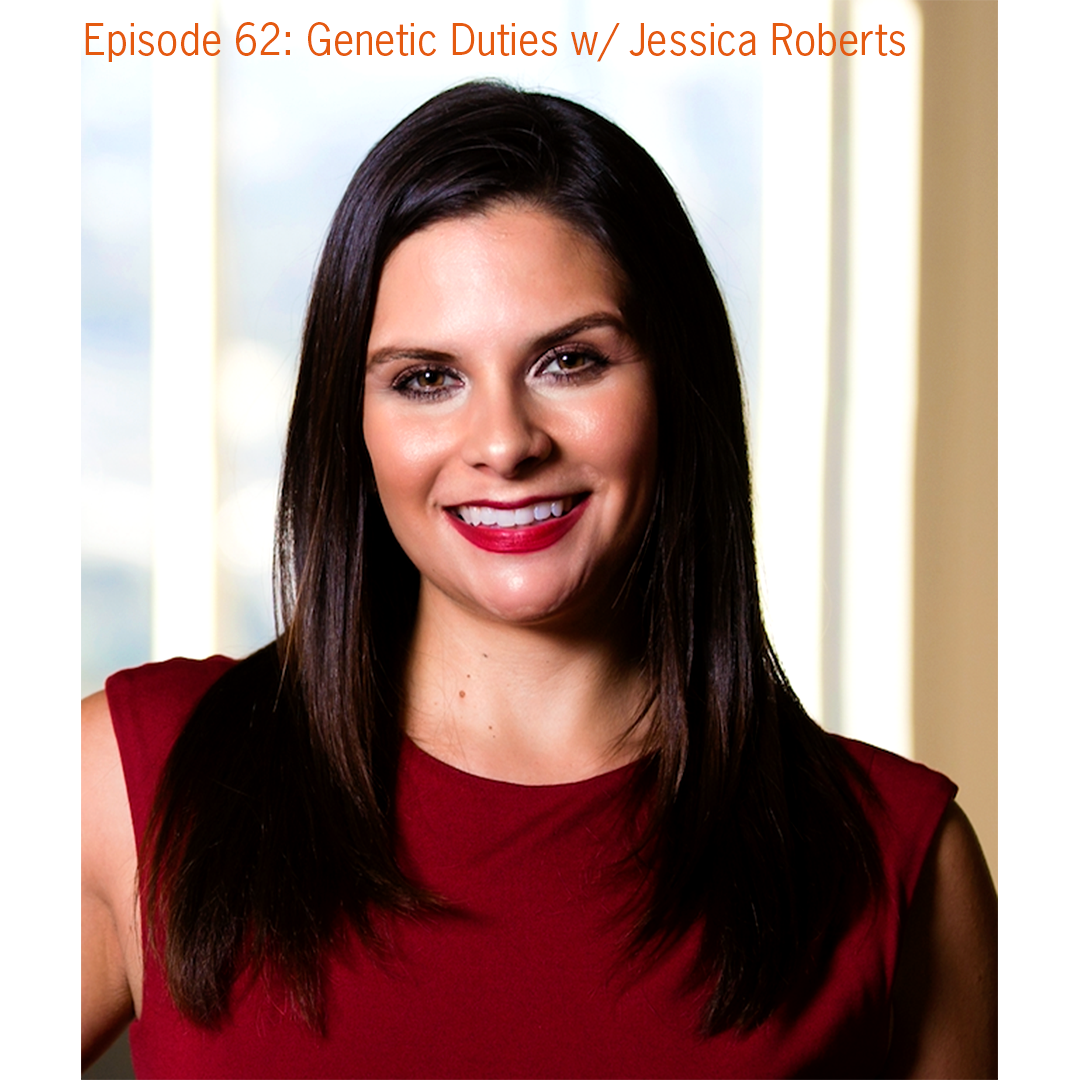
Back on the podcast today is Jessica Roberts – Professor of Law, Professor of Medicine, and Director of the Health Law & Policy Institute at the University of Houston Law Center – to talk about the emerging set of genetic duties issues related to genetic reclassification.

First question, genetic reclassification? No, it doesn’t mean your genes are changing. But as our understanding of the human genome expands, it means that what we know about how certain genetic variations translate into actionable health information. Genetic variations can be classified on a scale going from pathogenic to likely pathogenic, to likely benign, to benign with a middle area of variants of unknown significance (VUS – pronounced voos, not vee-you-ess). Essentially, genetic reclassification happens when enough new data comes in that it changes how a lab would classify that variation (shifting it from VUS to likely benign, for example).

I’ll steal the hypothetical Prof. Roberts uses in the podcast to explain. A woman in 2020 finds out that she has stage 4 breast cancer. The result is surprising because in 2010 she took a genetic test and the results indicated that she was not a heightened risk for breast or ovarian cancer. But somewhere in those ten years, new data came and the lab that processed her test in 2010 discovered that her genetic variation that they initially classified as, for this example we’ll say likely benign, is actually pathogenic, but she was never notified of the change in classification. Her genes never changed, but the medical community’s understanding of her genes did.

Here’s the “fun” part, this is new. There’s not much policy – legislative, regulatory, or otherwise – around this. It’s a huge can of worms for patients, doctors, labs, and healthcare providers that can be addressed in any number of different ways from granular terms of service and informed consent changes at the lab/doctor level to larger public policy changes that state legislatures can make. We dive into some of Professor Roberts’ thoughts on what policy changes could be made to address these issues.

If you are interested in diving deeper into the topic, check out the Genetic Duties by Professor Roberts and Alexandra Foulkes (forthcoming in the William and Mary Law Review). You can also find more of Jessica Robert’s research and writing on her SSRN page. You can also find more information about Professor Roberts on her University of Houston Law Center faculty page.

As always, if you enjoy the podcast, the best way to show your support is to subscribe to it on Apple Podcasts, Spotify, Stitcher Radio, or wherever you listen to podcasts. if you haven’t already. Another great way to support the show is to leave a 5-star rating and positive review for The CAP⋅impact Podcast on Apple Podcasts.

https://soundcloud.com/capimpactca/episode-62-genetic-duties-with-jessica-roberts

McGeorge Adjunct Professor Chris Micheli

https://soundcloud.com/capimpactca/how-gov-newsoms-executive-orders-are-impacting-rulemaking

On March 30, Governor Gavin Newsom issued Executive Order N‑40‑20. This executive order (EO) is intended to provide regulatory relief to California’s small businesses. This particular executive order has a number of provisions. For one, it extends the Office of Administrative Law’s, the OAL, deadlines to review certain regulations.

Specifically, the governor’s executive order provides that the deadlines that are specified in Government Code sections and the accompanying regulations related to the filing, refiling, certification, and/or the review of the regulations and emergency regulations are extended for a period of 60 calendar days.

Which provisions and Code Sections are being extended?

  • Government Code Section 11346.4(b) – requires the rulemaking process to conclude within one year from the date of commencement or else the rulemaking entity is required to recommence the entire rulemaking process.
  • Government Code Section 11346.1(h) – allows two additional 90-day periods for an emergency regulation to be in effect in addition to the 180‑day initial time period. The governor’s executive order adds another 60 days on to that.
  • Government Code Section 11349.4(a) – requires a rulemaking entity to resubmit within 120 days any revised regulation if the OAL disapproved the proposed rulemaking. Now, they’ll have 180 days to resubmit their disapproved regulation.
  • Government Code Section 11349.3(a) – requires the Office of Administrative Law to review, using the six statutory standards, any proposed rulemaking filed for a maximum of 30 working days. OAL has to either approve or disapprove the proposed regulation. This is extended by 60 days, for a total of 90 days.
  • California Code of Regulation Section 100 subdivision (c) – allows a rulemaking entity to make minor, non‑substantive changes to a regulation without following the formal rulemaking process. Again, this is currently 30 days by regulation. The EO grants them another 60 days.

You can find the full transcript of today’s podcast here.

McGeorge Adjunct Professor Chris Micheli

https://soundcloud.com/capimpactca/providing-effective-committtee-testimony

Today we’ll take a look at providing effective committee testimony to the California Legislature. Here are a couple of points to keep in mind.

  • Expect your testimony to be relatively short – two to three minutes at most.
  • Utilize facts and speak from your own personal experience. If need be, you can submit more formal testimony to the committee and its members.
  • When preparing your testimony remember to:
    • First – identify yourself
    • Second – state the organization you represent
    • Third – state whether you support or oppose the legislation
    • Fourth – identify the bill by name and number if it is not done already at the hearing
    • Fifth – Summarize your key points and then add any necessary explanation
    • Last – restate your position – support or oppose – at the end
  • Review, but do not over-rehearse your testimony. It should not sound like you’ve memorized what you have to say.
  • Always arrive early. Be prompt for the hearing you are testifying at.
  • If you are bringing hard copies of materials, make sure you have enough for the entire committee.
  • Speak directly into the microphone and adjust it if necessary.
  • Try not to repeat the points that have been made by previous speakers. If your points have already been made, tell the committee you agree with the prior testimony and urge the committee members to either support or oppose the legislation.
  • Answer questions that you can with clear and succinct answers. If you don’t have an answer to the question they have, offer to get back to them with an answer.
  • Don’t argue with members of the committee.
  • Don’t argue with those giving testimony in opposition to yours.
  • Keep copies of any information that you provide so that you are aware of what has been made available.

You can find the full transcript of today’s podcast here.