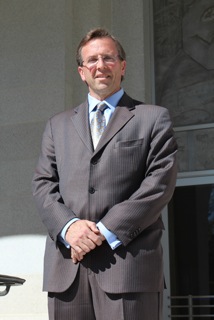
McGeorge Adjunct Professor Chris Micheli


Special districts are agencies that provide specialized services across the state. Special districts are created and governed by the local residents who vote to form them and each special district provides specified services for which they were created.

https://soundcloud.com/capimpactca/special-districts-in-california

In general, special districts are governed by a Board of Directors that is either elected or appointed. Voters who establish special districts can also elect the district’s Boards of Directors. Boards that are appointed are usually appointed by the elected City Council or the elected Board of Supervisors.

Among the special districts in California there are dependent and independent districts. Dependent districts are those that are governed by a City Council or a County Board of Supervisors. Independent districts have a manager who’s similar to a City Manager or a County Administrative Officer.

The most common type of special district is one focused on a single function. These can include library special districts, flood control districts, irrigation, or even mosquito abatement districts. There are also multi-function districts, such as community service districts, that provide two or more services.

Additionally, districts are characterized as being enterprise or non-enterprise districts. Enterprise districts generally operate like a business. Enterprise districts are funded by user fees for services they provide like water, waste, power, and transportation. The most common enterprise districts are usually utility districts and transportation agencies. Non-enterprise districts do not receive their funding from user fees.

There is also a trade association for the special districts in California called CSDA – the California Special Districts Association. According to CSDA there are about 2,300 independent special districts in the state of California that are accountable to the voters who created these districts as well as the customers to whom they provide these valuable services. Additionally, the state of California provides oversight of the special districts such as through the review of annual financial reports and other oversight provisions.

McGeorge Adjunct Professor Chris Micheli

https://soundcloud.com/capimpactca/choosing-judges-in-california

Members of the California judiciary are selected in one of two ways. Trial judges serve in the superior courts are elected by voters at an election for six year terms. The race is non-partisan. If there is a vacancy at the Superior Court level, the vacancy is filled by an appointment by the Governor.

Appellate court justices serve on either the courts of appeal in California or the California Supreme Court. They are appointed by the Governor and then evaluated and confirmed by the Commission on Judicial Appointments. There are more than 1,500 superior court judges and their terms begin on the Monday after January 1 following their election to office. For appellate court justices, their terms begin when the Appointments Commission files its approval with the Secretary of State.

The seven Supreme Court justices and the roughly 102 courts of appeal justices are first evaluated before a judicial appointment is made. The Commission on Judicial Nominee Evaluation – often referred to as the JNE Commission – is required to investigate the prospective nominees’ background and qualifications for the particular judicial appointment. There are four levels of ranking by this Commission and that ranking is provided to the Governor. Although these rankings do not bind the hand of the Governor, the appellate court appointment is eventually decided by a majority vote of the Commission on Judicial Appointments.

When filling a vacancy, the justices must face a retention election at the next gubernatorial election. Thereafter these justices must stand at a retention election every twelve years.

The qualifications of both trial court judges and appellate court justices are the same in the state of California. That is, they must have ten years of experience as a law practitioner or as a judge of a court of record, and, of course, they must be licensed to practice law in the state of California.

You can find a full transcript of today’s podcast here.

McGeorge Adjunct Professor Chris Micheli


https://soundcloud.com/capimpactca/californias-electoral-system

Today’s post is on some of the unique aspects of California’s electoral system.

As you know, there are nine constitutional offices that are elected statewide and 120 legislative offices. Constitutional officers run once every four years and are limited to running for a constitutional office two times. State Assemblymembers run every two years for reelection and State Senators run every four years. Under California’s current term limits law a legislator can serve a maximum of twelve years total in the Legislature – up to six terms in the Assembly, three terms in the Senate, or a combination of the two.

There are also judicial offices in California. There are two ways to be named a Superior Court judge – appointment by the Governor or to run for that office. At the appellate court level – Court of Appeal or California Supreme Court – judgeships are only done by gubernatorial appointment. However, these positions are subject to retention elections. This is opposed to federal judgeships, which are not elected and are lifetime appointments.

There are three significant measures that impact California’s electoral system and have done so over the last decade – the top two primary, the new term limits, and California’s independent redistricting committee.

Previously, the top vote getter from each party’s primary election would advance to face off in the November general election. That changed as part of a budget deal which placed the top two primary on the statewide ballot and was adopted by the voters. Under California’s current rules, the top two vote getters in the primary election proceed to the general election regardless of the political party affiliation of the candidates.

As a response to the self-proclaimed “Ayatollah of the Assembly,” Willie Brown, California voters enacted strict term limits in the 1990’s where Assemblymembers were restricted to a maximum of three two-year terms and Senators were restricted to two four-year terms. Such brief term limits meant legislators were constantly running for office which left major public policy issues unaddressed by legislators in a thoughtful manner. The new term limit law allows a maximum of twelve years of service to either house, or a combination of both houses.

Before California changed how legislative and Congressional seats are drawn, districts were drawn by the Legislature and a regular complaint was that incumbents and the majority party were protected. The issue of redistricting was taken to the voters in a ballot measure where voters approved a measure that places the job of drawing district boundaries for legislative, Congressional, and Board of Equalization seats in the hands of an independent commission, rather than legislators.

McGeorge Adjunct Professor Chris Micheli


Article II of the California Constitution sets forth the three forms of direct democracy used in this state – the initiative, referendum, and recall.

https://soundcloud.com/capimpactca/constitutional-provisions-on-direct-democracy

The initiative is the power of the electors to propose statutes and amendments to the state Constitution. An initiative may be proposed by presenting to California’s Secretary of State a petition that sets forth the text of the proposed statute or amendment to the Constitution and is certified to have been signed by a number of electors equal to 5% – in the case of a statute – or 8% – in the case of a constitutional amendment – of the number of votes cast for the candidates for governor in the last gubernatorial election.

The referendum is the power of the electorate to approve or reject statutes or parts of statutes. Urgency statutes, statutes calling elections, and statutes providing for tax levies or appropriating funds for the usual and current expenses of the state are exempted from the referendum process. A referendum may be proposed by presenting to the Secretary of State a petition signed by a number of electors equal to 5% of the votes cast for the candidates for governor in the last gubernatorial election. Unlike initiative proposals, a referendum proposal must be presented to the Secretary of State within  days of the law being enacted.

An initiative or referendum that is approved by voters takes effect on the fifth day after the Secretary of State files the Statement of the Vote for the election at which the measure was voted on. The measure may provide that it becomes operative after its effective date. If the provisions of two or more measures approved at the same election conflict, then the provisions of the measure receiving the highest number of affirmative votes prevails.

The recall is the power of electors to remove an official from an elected office. Removal of a state elected official is initiated by submitting to the Secretary of State a petition alleging the reason for a recall. The sufficiency of that reason is not reviewable. Proponents of a recall have 160 days to collect signatures, and to qualify the number of signatures must be equal to 12% of the last vote for that office with signatures in five counties equal in number to 5% of the last vote for the office in that county.


McGeorge Adjunct Professor Chris Micheli


2018’s Assembly Bill 3247 was signed into law by Governor Jerry Brown on July 16, 2018, as Chapter 106. The law has been in effect since January 1, 2019. This new law modified the arbitration agreement enforcement language in the California Code of Civil Procedure.

https://soundcloud.com/capimpactca/ab-3247

AB 3247 was authored by the full Assembly Judiciary Committee. The new law amends Section 1281.1 of the California Code of Civil Procedure, which is the provision of the Code of Civil Procedure that governs arbitration agreements in the state of California.

The bill makes two changes to existing California law, one change is technical while the other is substantive. The technical amendment is specific to the arbitration agreement and substitutes the word “that” for “such.” The substantive change to existing law is made in Section 1281.2, subdivision (b), which now says that grounds exist for “rescission” of the agreement, as opposed to revocation.

As a result, this bill provides that a court is not required to order parties to arbitrate a controversy if the court determines that grounds exist for rescission of the agreement rather than revocation of the agreement.

Ab 3247 had no officially listed supporters or opponents. Instead, what members of the Legislature saw in their Floor Analyses was that in the California Supreme Court’s decision in Armendariz v. Foundation Health Site Care Services, the California Supreme Court made it clear that rescission is the appropriate terminology, not revocation. AB 3247 corrects this misnomer by replacing the term “revocation” Section 1281.2 of the California Code of Civil Procedure with the word rescission, clarifying the statute.

Lastly, one fun fact about the Armendariz decision as it relates to AB 3247. The part of the decision in Armendariz v. Foundation Health Site Care Services that led to the drafting and passage of AB 3247 is that it was in a footnote where the California Supreme Court noted what the correct terminology should be.

McGeorge Adjunct Professor Chris Micheli


Today’s post and podcast is a brief look at the Commission on Uniform State Laws. If you listened to either of the podcasts by Jon Wainwright with Texas A&M Professors William Henning or Thomas Mitchell you may already be somewhat familiar with the work of the Commission.

https://soundcloud.com/capimpactca/commission-on-uniform-state-laws

The Uniform Law Commission is a non-profit that was established in 1892. The Commission is charged with providing states with well researched and drafted legislation to hopefully bring stability to different areas of law across all of the states. California created the CCUL – California Commission on Uniform State Laws – in 1897. It is tasked with representing California on the national Uniform Law Commission.

In 2012, the California Commission on Uniform States Laws was incorporated into the Office of Legislative Counsel. The Commission itself consists of one State Senator, one Assemblymember, six gubernatorial appointees, the Legislative Counsel herself, any person elected as a lifetime member of the National Commission, as well as any person who has served as Commissioner for the last five years. Commissioners serve at the pleasure of their appointing authorities and must be members in good standing of the State Bar. They can be admitted to practice in another state or be a judge in the state of California. The Commission meets at least once every two years, per California law, and must report to the California Legislature at a frequency the Commission deems practical.

There are numerous bills that have been promulgated by the Uniform Law Commission that are in effect in California. The laws range from adult guardianship in protective proceeding jurisdictions, to multiple articles of the Uniform Commercial Code, to durable powers of attorney, electronic transactions, wills, acts involving military and oversees voters, and premarital agreements among many others.

I cover more details about the national and California Uniform Law Commissions in today’s podcast.

You can find a full transcript of today’s podcast here.

McGeorge Adjunct Professor Chris Micheli


https://soundcloud.com/capimpactca/california-law-and-maxims-of-jurisprudence

While California statutes don’t provide general canons of statutory construction or interpretation, we can look at the California Civil Code for the Maxims of Jurisprudence. They are found in Division 4, Part 4 of the California Civil Code. What are these maxims? A “maxim” is generally defined as a short, pithy statement expressing a general truth or rule of conduct.

I think, indeed, they are often short, pithy statements. Part 4 was primarily enacted in 1872. A few of these maxims were added in 1965, but the bulk of them were placed in statute in 1872. There are 38 separate code sections. In Civil Code Section 3509, it explains that these Maxims of Jurisprudence, as set forth, are intended not to qualify any of the foregoing provisions of this Code, but to aid in their just application. Below is a brief summary of some of the jurisprudential maxims that are in California Civil Code:

“When the reason of a rule ceases, so should the rule itself.

Where the reason is the same, the rule should be the same.

One must not change his purpose to the injury of another.

Anyone may waive the advantage of a law intended solely for his benefit. But a law established for a public reason cannot be contravened by a private agreement.

One must so use his own rights as not to infringe upon the rights of another.

He who consents to an act is not wronged by it.

Acquiescence in error takes away the right of objecting to it.

No one can take advantage of his own wrong.

He who has fraudulently dispossessed himself of a thing may be treated as if he still had possession.

He who can and does not forbid that which is done on his behalf, is deemed to have bidden it. No one should suffer by the act of another.

He who takes the benefit must bear the burden.”

You can find a full transcript of today’s podcast, including the remaining maxims, here.

McGeorge Adjunct Professor Chris Micheli


https://soundcloud.com/capimpactca/direct-democracy-in-california-a-brief-history-and-its-functions

Direct democracy is the term we in government use to describe the ability of the voters to take matters into their own hands. In other words, it is the ability of the voters to enact or repeal laws, or recall elected officials. California is one of two dozen states that gives voters these checks on elected officials. The three forms of direct democracy – recall, initiative, and referendum – are not available at the federal level because neither the US Constitution nor federal law provide for them. California’s Constitution was amended in 1911 to provide for these forms of direct democracy.

Recall

Local and state elected officials can be recalled from office, meaning voters can vote to remove an elected official from their office before the next scheduled election. This process requires a petition that must be signed by a specified number of voters. Once that threshold is certified by either the Secretary of State or the County Registrar of Voters for state or local elected officials, respectively, the recall petition is then placed before voters within a specified amount of time.

In many instances recalls are used for purely political purposes because an individual or an interest group feels that a legislator voted for or against something that greatly displeased them. In other words, recalls are often not due to a violation of the public’s trust, or unethical or criminal conduct, but rather a specific vote.

Initiative

This form of direct democracy is for voters to make laws. They can use this process to add, amend or repeal statutes or the California Constitution. The number of signatures required to place amendments to the California Constitution on the ballot – 8% of the votes cast in the previous statewide gubernatorial election – is higher than the number required for initiative statutes – 5%. Neither nor the Governor nor the Legislature have a formal role in an initiative, although the Legislature must conduct an informational hearing on ballot measures.

The Legislature can place constitutional amendments on the ballot through a vote on either an Assembly Constitutional Amendment (ACA) or a Senate Constitutional Amendment (SCA), but doing so requires a two-thirds vote in the Legislature. The Governor does not act on ACAs or SCAs. Once the initiative is placed on the ballot, it requires a simple majority vote to be enacted by the voters. Constitutional amendments can add, amend, or repeal sections of the California Constitution, but they cannot revise the Constitution.

Referendum

The referendum allows voters to repeal a statute that was adopted by the Legislature and signed by the Governor. There are some restrictions on the referendum process. The number of required signatures must be acquired within 90 days of the bill being signed into law, versus 180 days for initiatives. While the vast majority of bills can be subject to referenda, some cannot. Bills that contain an urgency clause, a tax levy, or make appropriations for certain state expenditures are exempt from referenda. It is also worth noting that once a referendum qualifies for the ballot the bill – or the piece of the bill – that is subject to the referendum does not go into effect until after voters have had their say.

You can find a full transcript of today’s podcast here.

McGeorge Adjunct Professor Chris Micheli

https://soundcloud.com/capimpactca/the-california-constitution

California’s Constitution was first adopted in 1849, just prior to California becoming a state in 1850. The current constitution was then ratified on May 7, 1879 and is the governing document for the state of California, similar to the U.S. Constitution being the governing document for the entire country.

The California constitution has been amended or revised several hundred times and is one of the longest constitutions in the world. This is mainly attributed to it being adopted over the decades by the people through the use of ballot measures on statewide ballots. In fact, California is known well for placing measures on the ballot, mainly because it has one of the lowest thresholds of all the states for placing measures on the statewide ballot.

It’s interesting to note that California’s constitution authorizes a number of state agencies, such as the University of California (but not the CSU or community colleges) and Stanford University for some of its property, our State Compensation Insurance Fund, and even the State Bar of California for regulating licensing attorneys in the state. This is to protect these particular state institutions from some level of governmental interference.

The state constitution also provides for counties, cities, and charter cities – which are those that have local ordinances that are somewhat insulated from state laws. According to the constitution, cities are permitted to pay counties to perform governmental functions.

In order to appreciate the length and the complexity of our state’s constitution, let’s just take an overview of the articles of the California constitution.

The first article, of course, is a declaration of rights and it has 32 sections, including Article 1 Section 1: the right to privacy in the state. Article 2 deals with voting, the initiative and referendum, and the recall, and this article has 20 sections. Article 3 is a general article dealing with the State of California and has nine different sections. Article 4 is the first branch of government, the Legislative, which has 28 sections. Then we have Article 5, dealing with the executive branch which has 14 sections. Then Article 6 deals with our third branch of government, the judiciary, and has 22 different sections.

You can find a full transcript of today’s podcast here.

McGeorge Adjunct Professor Chris Micheli


https://soundcloud.com/capimpactca/the-impact-of-the-state-budget-on-public-policy

California’s budget process continues to be and have a major impact on the state’s public policy agenda. From my vantage point, this is because numerous policy changes are enacted every year as part of the state budget. In other words, state public policy continues to be done as part of the funding of our state government.

For decades our state budget required a two-thirds super majority vote for adoption. This often resulted in a late adoption of the state budget and unfortunate partisan wrangling over priorities for spending state tax dollars. With the Legislature generally controlled by the Democratic Party and the Governor’s office often occupied by a Republican chief executive, the state budgets were often negotiated with the “Big Five” which included the Governor, the Senate President Pro Tem, the Assembly Speaker, the Senate Republican Leader, and the Assembly Republican Leader.

Some of the Republicans viewed the budget negotiations as an opportunity to, if you will, leverage their votes that were needed in order to get to that magical two-thirds threshold. They started thinking what can we leverage our budget votes for? What they quickly figured out was that they would often use those votes to address policy issues or even specific bills that they wanted passed but they couldn’t get through the normal Democrat-controlled Legislature and the normal legislative process.

After a fair amount of time of this, repeated budget delays, and, frankly, a feeling of being leveraged for policy changes that sometimes the Democrat-majority found difficult to accept, interest groups placed a statewide ballot measure, Prop 25, before the electorate which reduced the vote threshold from that two-thirds majority to a simple majority. That’s been in effect the last half a dozen years. As a result of this measure that was adopted by the voters, there is now on time budgets and negotiations are no longer amongst the Big Five.

Some people certainly thought that legislators’ votes would no longer be leveraged to perhaps adopt objectionable policy changes sometimes as part of the annual budget deal. The reality, of course, is that policy changes still occur in those budget negotiations. All those years of adopting policy changes as part of the state budget has certainly created proponents of that process in both the Governor’s office as well as in Democratic legislators’ offices.

Essentially they all like the idea of the expedited review and adoption of bills and policy changes that occur in that shortened budget process rather than pursuing bills through a lengthy and often contentious bill process that can begin in January or February with the introduction of your bill and continue – if it’s an even numbered year through August 31st, or if it’s an odd numbered year through the middle of September.

These policy changes are accomplished through the use of trailer bills. Trailer bills make policy changes necessary to implement the spending in the state budget. They are called trailer bills because they trail the main budget bill. There used to be just a handful of these trailer bills, but now their number has seemingly mushroomed as the need for more and more policy changes has grown. We often end up seeing many more of these bills being used to adopt sometimes controversial law changes that may or may not have been successful had they been tried through the normal legislative process.

You can find a full transcript of today’s podcast here.