Greensheets Staff Writer Maddy Orlando who wrote on California's "PG&E Bailout" billBy: Maddy Orlando

California seemingly cannot escape wildfires. Wildfires are to California what hurricanes are to Florida and tornadoes are to Texas. The Tubbs fire in 2017 broke the record for most destructive wildfire in California history, only for 2018’s Camp Fire to break that record one year later. In addition to being the most destructive wildfire, the Camp Fire is also California’s deadliest wildfire. Combined, California wildfires in 2017 and 2018 killed 139 people, destroyed communities, and changed the lives of tens of thousands of Californians. Rich Ellison, a longtime Paradise resident, explained the devastation the town felt after the fires: “Those people are gone and it can’t be replaced and that’s the sad part right there. They’ve lost everything.” There is an insurmountable amount of issues that result from a fire like the town of Paradise saw in November of 2018. However, the issue that’s kept most everyone’s attention is not the death toll or property destruction, but rather the impact these fires had on utility companies, mainly PG&E, which filed for bankruptcy in January 2019.

Fires are expensive. Fighting them is one part of the cost, but moving on from them is another. Fires destroy houses, cars, and property, and that does not even begin to account for the injuries and deaths to humans and animals. In California when a utility company’s infrastructure sparks a wildfire the company is required to pay for the destruction its infrastructure causes. Staring down the barrel of the billions of dollars of liabilities from recent wildfires, utility companies face real threats of insolvency. And despite the utilities’ questionable treatment of ratepayers, there is no question that the Legislature had to act or risk facing another serious energy crisis.

That is where AB 1054 comes in. The idea behind the bill is to help ratepayers by creating a wildfire fund that pools capital into one place that utilities like PG&E and Southern California Edison, if they act reasonably and according to government guidelines, can draw from to pay off the claims against them. This would provide quicker access to capital to pay off liabilities and, in turn, quicker relief to victims. It would also promote greater accountability and responsibility on behalf of the utilities by allowing access only with reasonable behavior.

AB 1054 sounds great on paper. But in reality, the bill just provides a cushion for the Legislature and electrical utilities to create better measures and practices for mitigating fire risk moving forward. One of the major critiques of the bill is its lack of requested accountability of the utility companies. In exchange for promises, the companies have access to the wildfire fund without much action on their behalf. For that reason, many people have dubbed the bill the “PG&E Bailout Bill”, as the bill seemingly saves PG&E’s assets by providing it with necessary funds to move forward without requiring specific actions in return. The funds are necessary because utility companies such as PG&E are vital parts of the state’s infrastructure. Without the health of these companies, the health of California’s infrastructure at large is put at risk.

The problem many people have with the bill is that, right now, it is just promises. And while the listed reforms and safety measures to ensure against future disaster for each utility to take sounds like the steps in the right direction, there is no way to know what steps they will actually take and what will work. The wildfire fund provides the necessary capital to be able to take those steps, but once the foundation is laid it is up to the companies to act upon that–something that scares many lawmakers.  Elected officials have warned that the 2017 and 2018 wildfires are the new normal. Californians would hope though that the buffer AB 1054 provides the Legislature and the utility companies would allow time for both parties to find time to implement meaningful change. That is one big if while many people hold their breath amidst another fire season.

You can subscribe to the In Session podcast and listen to my broader conversation about AB 1054 and related legislation with Thomas Gerhart on Apple Podcasts, Stitcher Radio, Spotify, or on your favorite podcast app.
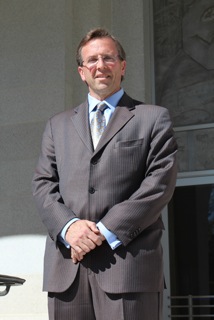
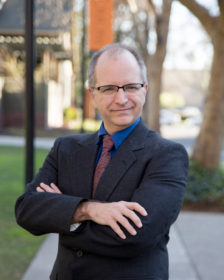
McGeorge Adjunct Professor Chris Micheli

https://soundcloud.com/capimpactca/amending-or-revising-the-california-constitution

In today’s podcast, I look at the different processes laid out in California’s Constitution for amending or revising the Constitution.

California’s Constitution was originally adopted in 1849 and has become one of the longest constitutions in the world, nearly 100 pages in length. This is partly due to the number of voter-approved additions to the Constitution.

An amendment to the state constitution requires passage of a ballot measure that is approved by a majority vote of the state’s electorate. Amendments can be placed on the ballot by legislators or by the voters themselves.

For voters to place an amendment on the ballot, they must collect valid signatures from a number of voters equal to 8% of the votes cast in the most recent gubernatorial election. This is one of the lowest thresholds of any state in the United States. For the Legislature to place a constitutional amendment on the ballot, each house of the Legislature must pass the proposed constitutional amendment by a two-thirds vote. The Governor does not act on proposed constitutional amendments. Once passed, the amendment is placed on the next statewide ballot. Again, whether placed on the ballot by voters or the Legislature, a constitutional amendment is approved by voters with a majority vote.

The Legislature can also, with a two-thirds supermajority vote, place on the ballot an initiative to revise the state constitution via a Constitutional Convention. If the majority of voters vote yes, the Legislature must provide for that Constitutional Convention within six months. Delegates are voters elected from districts as equal in population as may be practical.

You can find a full transcript of today’s podcast here.

McGeorge Adjunct Professor Chris Micheli

https://soundcloud.com/capimpactca/the-2019-california-legislative-session-by-the-numbers

With the 2019 legislative session now concluded, let’s take a look at the most recent session by the numbers. Given the Democratic supermajorities in both houses of the California Legislature and the shift from Governor Jerry Brown to Governor Gavin Newsom, I’ll also compare this session to the 2017-18 legislative session.

Let’s start with the number of bills introduced:

  2019 2018 2017-18 Session Total
Assembly Bills 1,833 1,531 3,264
Senate Bills 792 694 1,511
Total 2,625 2,225 4,775


Moving on from the number of bills introduced, we can compare the number of bills signed into law and the number of bills vetoed by the two Governors.


Number of Bills Signed into Law (Percentage of Bills Introduced Signed into Law)

  2019 2017-18 Session Total
Assembly Bills 574 (22%) 1,228 (37.5%)
Senate Bills 296 (11%) 647 (43%)
Total 870 (33%) 1,875 (39%)


Number of Bills Vetoed (Percentage of Bills Introduced Vetoed)

  2019 2017-18 Session Total
Assembly Bills 122 (5%) 86 (2%)
Senate Bills 50 (2%) 233 (5%)
Total 172 (6.5%) 319 (7%)


We can now move from a macro view of the sessions to a more micro view of the session. Let’s start by looking at the Senators who authored the most bills in 2019. It was:

  1. Cathleen Galgiani (27)
  2. Ben Hueso (26)
  3. (tie) Bob Hertzberg, Jim Nielsen, Anthony Portantino (25)
  4. (tie) Bill Dodd, Henry Stern, Scott Weiner (24)

In the 2017-18 Session, the most prolific bill authors in the State Senate were:

  1. Jerry Hill (48)
  2. Ricardo Lara (35)
  3. (tie) Cathleen Galgiani, Steve Glazer, Ed Hernandez, Connie Leyva, John Moorlach, Janet Nguyen, Richard Pan, Anthony Portantino, Jeff Stone, and Scott Weiner (40)
  4. (tie) Ben Allen, Steven Bradford, Hannah-Beth Jackson, Nancy Skinner, Henry Stern (39)

In the lower house, the Assemblymembers who authored the most bills in 2019 were:

  1. Jim Frazier (36)
  2. Autumn Burke (32)
  3. Lorena Gonzalez-Fletcher (31)
  4. (tie) Rob Bonta, Wendy Carrillo, Marc Levine, Evan Low (30)
  5. Jacqui Irwin, Randy Voepel (28)

In the 2017-18 session, the most prolific bill authors in California’s lower house were led by Assemblymember Phil Ting at 102, due to all of the budget related measures that he carries. Behind him were:

  1. (tie) Richard Bloom, Rob Bonta, Autumn Burke, Eduardo Garcia, Lorena Gonzalez-Fletcher, Marc Levine, Blanca Rubio (50, the maximum number of bills allowed)
  2. (tie) Joaquin Arambula, Anna Caballero, Monique Limon, Evan Low, Bill Quirk, Miguel Santiago, Jim Wood (49)
  3. (tie) Mike Gipson, Jacqui Irwin, and Patrick O’Donnell (48)

Lastly, we’ll look at the number of bill referrals to committees based on original committee referrals. On the Senate side in 2019, the top committees were:

  1. Education (167)
  2. Health (150)
  3. Public Safety (149)
  4. Judiciary (123)
  5. Governance and Finance (120)

In the Assembly for this past session:

  1. Public Safety (217)
  2. Health (202)
  3. (tie) Education and Transportation (138)
  4. Natural Resources (124)

Looking at the session before last, the Senate committees with most original bill referrals were:

  1. Education (313)
  2. Public Safety (288)
  3. Transportation and Housing (237)
  4. Health (226)
  5. Governance and Finance (223)

In the Assembly:

  1. Public Safety (384)
  2. Health (300)
  3. Education (260)
  4. Judiciary (247)
  5. Transportation (233)

You can find a full transcript of today’s podcast here.

McGeorge Adjunct Professor Chris Micheli

https://soundcloud.com/capimpactca/an-overview-of-governor-newsoms-2019-bill-actions

Now that the deadline for Governor Newsom to act on the legislation that made it to his desk has passed, we can take a brief overview of how he acted on the bills that made it to the Governor’s desk in his first year in office.

In total, 1,042 bills – out of 2,625 that were introduced – made it to the Governor’s desk. Of that 1,042, 740 were acted upon in the final month of the 2019 legislative session. As a result, 40% of the bills introduced made it to Governor Newsom’s desk, which is about the average. 33% of the bills introduced were signed into law and 6.5% of the bills introduced were vetoed. The percentage of introduced bills being signed is down compared to Governor Jerry Brown’s final year in office in 2018 (33% signed into law in 2019 compared to 45% in 2018), and Governor Newsom’s veto rate was also lower the former Governor Brown’s in 2018 (6.5% vetoed this year compared to 9% last year).

Of the 1,042 bills that reached Governor Newsom’s desk, 870 bills were signed. Of those that were signed into law 66% were Assembly Bills, of which 83% were authored by Democrats, 9% were authored by Republicans, and 8% were committee bills. The remaining 34% of bills signed into law originated in the Senate. Of the SBs, 76% were authored by Democrats, 10% were authored by Republicans, and 14% were committee bills.

On the other hand, Governor Newsom vetoed 172 bills that reached his desk. Of those, 71% were ABs. Of the ABs, 88.5% were authored by Democrats and 11.5% were authored by Republicans. Looking at the Senate Bills that were vetoed, we see that 84% of the vetoed SBs were authored by Democrats and 16% were authored by Republicans.

Greensheets staff writer Mike Adams at McGeorge School of Law

By: Mike Adams

Kids these days with their newfangled smartphones! It’s stunting their brains!

It sounds like a clichéd complaint from an older generation, but that grouchy old curmudgeon might actually be right. Modern social science research is starting to uncover some very serious negative effects of excessive screen time. Depression and lowered school achievement are two of the known effects, let alone the issue of cyberbullying. When that grouchy curmudgeon was growing up bullies might dunk a kid’s head in a toilet. But at least the kid could go home at the end of the day to escape their tormenter. With smartphones and the 24/7 connection to all the various forms of social media that comes with them, bullying follows the victim wherever they go.

If we’re going to try to address these problems, we need to find a place where our intervention would be maximally effective. A nexus where all these problems occur, and where it is possible to provide children with a respite from smartphones—the school system. If the law allowed it, and if schools enforced it, some kind of smartphone ban at school might be really good for kids’ mental health.

That’s what AB 272 aims to do. It gives school districts, charter schools, and county offices of education the power to ban smartphones.

Wait, “Blocking kids from access to their property, and restricting their free speech?” you might ask. How fast can you say “constitutional challenge?” Most people are not aware of how much leeway schools have in regulating the speech and possessions of students. Yes, it turns out that a school can indeed prevent a student from using their favorite medium for speech without running afoul of the First Amendment. The school can even seize the device itself without running afoul of the Fourth Amendment. There are some outer limits that schools cannot cross, but my article sketches out those boundaries, so a school official can steer clear of them.

Now, the weird thing is that California law already allowed schools to ban “electronic signaling devices.” The archaic language indicates that was an old law, and few schools really noticed it or took advantage of that power. What’s worse, the old law was clunky—with gaps in coverage and unclear language—and had the potential to conflict with other education laws. It was written before charter schools were a hot topic and before accommodating students with disabilities was taken so seriously.

AB 272 brings the idea of a school ban on smartphones back into the spotlight, and it broadens the coverage by allowing nontraditional schools to use its provisions. This new law also carves out some important exceptions that would make such a ban work more smoothly with the rest of the education system. It reacts to the problems created by smartphones, while also trying not to overreact. My article suggests some ways for a school to tailor a smartphone ban so that it does the maximum amount of good for students’ mental health while doing a minimum amount of harm.

You can subscribe to the In Session podcast and listen to my broader conversation about AB 272 with Thomas Gerhart on Apple Podcasts, Stitcher Radio, Spotify, and everywhere else podcasts are listened to.

McGeorge Adjunct Professor Chris Micheli was published in the National Law Review. His new article,  A Look at California’s New Labor Employment Laws, was published yesterday. You can also find the complete list of his articles published by the National Law Review here.

Chris Micheli is an attorney and partner at the Sacramento governmental relations firm Aprea & Micheli. As an adjunct faculty member at McGeorge School of Law, he co-teaches the Lawmaking in California and Legislative and Public Policy Clinic courses in McGeorge’s Capital Lawyering Concentration.

McGeorge Adjunct Professor Chris Micheli

https://soundcloud.com/capimpactca/constitutional-provisisons-of-californias-executive-branch

Most of the powers of the executive branch of California’s state government are found in Article V of the California Constitution. Today’s post and podcast is a description, briefly, of those constitutional provisions affecting the Governor and his or her administration. A smaller sample of the Governor’s powers are discussed in the post, while a broader discussion is in today’s podcast.

Section 4 of Article V provides the Governor can require officers and agencies to furnish information to him related to their duties.

Section 6 authorizes a statute to allow the Governor to reorganize functions among state agencies other than those of the remaining constitutional offices. This is generally known as a Governor’s Reorganization Plan, or GRP.

Section 8 provides the Governor with authority to grant a reprieve, a pardon, and commutation, except for cases of impeachment. The Governor must report to the Legislature any grants, and provide the facts and reasons for doing so. There are no pardons for persons twice convicted of a felony unless the Supreme Court recommends it.

Section 9 of Article V requires the Lieutenant Governor to have the same qualifications as the Governor. The Lieutenant Governor is the president of the Senate, but may only cast a vote on a tie.

Section 10 provides the Lieutenant Governor will become the governor when a vacancy in the office occurs. He or she shall act as the Governor during an impeachment proceeding, when the Governor is out of state, or when the Governor has a temporary disability. There is an order of precedence for succession to the governor’s office or temporarily exercising the governor’s function. The Supreme Court has exclusive jurisdiction under this section to address any questions.

You can find a full transcript of today’s audio here.

McGeorge Adjunct Professor Chris Micheli

https://soundcloud.com/capimpactca/constitutional-provisions-of-californias-legislative-branch

Most of the provisions pertaining to the California Legislature can be found in Article IV of the California State Constitution, although provisions affecting the legislative branch of government appear in nearly half a dozen other articles of the state constitution. The California Constitution is generally looked at in order to determine whether it prohibits an action by the Legislature rather than as a source of power for the legislative branch of state government.

I discuss some of these provisions on the Legislature in today’s post and cover more of them in today’s audio. Section 4 of Article IV prohibits the legislators from receiving any salary or earned income from lobbyists, lobbying firms, or anyone with a contract with the Legislature for the past 12 months. No legislators can accept any honorarium and the Legislature is required to enact strict limits on gifts. Legislators are prohibited from accepting compensation or taking any other action on behalf of another person before a state agency or board.

California’s revolving door prohibition is enshrined in Article IV as well and prohibits legislators from lobbying the Legislature for 12 months after leaving office.

If the general fund revenues decline substantially below the estimate for the fiscal year, then the governor may issue a proclamation declaring a fiscal emergency and call the Legislature into a special session. If the legislature fails to pass a bill to address the fiscal emergency within 45 days, then no other bill may be acted upon, nor may the Legislature adjourns for recess.

Section 18 grants the sole power of impeachment to the Assembly. Impeachments are tried in the Senate. A person can only be convicted by the Senate by a two-thirds majority vote. Statewide elected officials, Board of Equalization members and state court judges are subject to impeachment for misconduct in office and they can be removed from office by the Senate.

This is just a sampling of the constitutional provisions on the Legislature contained in Article IV of the California Constitution. I discuss more provisions in today’s podcast.

You can find a full transcript of today’s podcast here.

Yesterday, Governor Gavin Newsom signed Senate Bill 338 (Hueso) the California Senior Disability and Justice Act into law. The press release announcing the signing of the bill into law signaled a major accomplishment for Stephanie Chavez and Spencer Saks. SB 338 was the bill that Stephanie and Spencer worked on while in the Legislative and Public Policy Clinic at McGeorge School of Law. After a year of hard work, collaborating closely with the office of Senator Ben Hueso and Arc of California, Spencer and Stephanie have a new law to show for their efforts.

“This was definitely a team effort,” said Spencer Saks after learning SB 338 had become law, “I’m excited to know that our work could help elderly and disabled Californians have access to the justice they deserve.”

Not only did the bill become law, but it navigated its way through the California Legislature without receiving a single no vote.

According to the Senate Floor Analysis of the legislation, SB 338 “establishes the “Senior and Disability Justice Act” which requires a local law enforcement agency that adopts or amends its policy regarding senior and disability victimization after April 13, 2021, to include information and training on elder and dependent adult abuse as specified.”

The Legislative and Public Policy Clinic at McGeorge School of Law is taught by Elizabeth Fenton and Cathy Christian.

McGeorge Adjunct Professor Chris Micheli was published in the National Law Review. His new article, Using Letters to the Daily Journals for Determining Legislative Intent; Compilation of Assembly and Senate Letters from Bill Authors – 2019 Update, was published last Friday. You can also find the complete list of his articles published by the National Law Review here.

Chris Micheli is an attorney and partner at the Sacramento governmental relations firm Aprea & Micheli. As an adjunct faculty member at McGeorge School of Law, he co-teaches the Lawmaking in California and Legislative and Public Policy Clinic courses in McGeorge’s Capital Lawyering Concentration.