Initiatives and Referendum

In yesterday’s podcast, I discussed common misconceptions about elections in California. Today I am taking a deeper look at elections in California. Specifically, I will be talking about initiatives and referendum – two of three direct democracy processes available to voters in California. The third process is the recall.

The direct democracy process dates back to the early 1900s and was proposed by the Progressive Party as a means to counter the all-powerful Southern Pacific Railroad. At the time, California was the tenth state to enact direct democracy procedures – the initiative, the referendum, and the recall.

As a brief overview, there are two types of initiatives – statutory and constitutional amendment. This process is used to create laws or changes to the constitution that the people of California believe the elected officials are either unable or unwilling to enact themselves. To qualify an initiative, the initiative is first drafted, then is given to California’s Attorney General for Title and Summary. Then it must gain a sufficient amount of signatures in order to be placed on the ballot. One difference between statutory and constitutional amendment initiatives is here at the signature gathering phase. In order to qualify for the ballot, statutory initiatives must receive signatures equal to 5% of the votes cast for all candidates for Governor in the previous gubernatorial election whereas constitutional amendment initiatives must receive signatures equally 8% of that number. Proponents have 180 days to collect that number of signatures.

Referendum are used to approve or reject – usually reject – recently enacted statutes in whole or in part. There are some exceptions to this that I mentioned in yesterday’s podcast. Referendum go through a similar qualification process. Referendum must also receive a number of signatures equal to 5% of the votes cast for all candidates for Governor in the last Gubernatorial election. However, referendum campaigns only have 90 days to collect the required number of signatures.

In recent years, the direct democracy process has been more often utilized by special interest groups and wealthy individuals who end up funding multi-million dollar campaigns in efforts to change the law – sometimes in a very self-serving manner. We’ve also seen recently a growth in the use of the initiative process and an increase in the cost of initiative campaigns.

We did a little calculation over the first 100 years of the initiative process being available. That is, from 1912 through July of 2013. And what we found were the following: 1,767 initiatives were given Title and Summary and circulated for signatures. Of those, 1,311 – or 74% of them – actually failed to qualify. Moreover, 92 of them were withdrawn. So as a result, 360 initiatives, or only 20% – qualified for the ballot. Of those 360 initiatives that qualified, and therefore appeared on a California state ballot, only 122 of them were approved by the people – just under 7%. So, even if initiatives are increasingly becoming the tool of special interest groups, the odds of success on the statewide ballot are pretty slim.


California Attorney General Xavier Becerra has filed a total of 22 lawsuits in 17 different subject areas against the Trump administration.

The Sacramento Bee compiled a list of all the pending cases, along with quick summaries of each, and arranged them by subject matter. You can find links to the many complaints filed by California Attorney General Xavier Becerra below.

For more of my takes on these issues, you can refer back to my previous post on the Attorney General’s lawsuit over birth control exemptions.

Misconception Monday – Elections

Hello, and welcome to Episode 6 of my Misconception Monday series. In this series of podcasts, I identify and dispel common misconceptions that are related to the many aspects of the California legislative process. You can revisit my previous Misconception Monday posts here.

In today’s podcast, I discuss some common misconceptions about elections in California. Some of the misconceptions include when the general election is held statewide for Legislators; the signature threshold for statutory initiatives and constitutional amendment initiatives; and which bills enacted by the Legislature, and signed by the Governor, are subject to referendum.

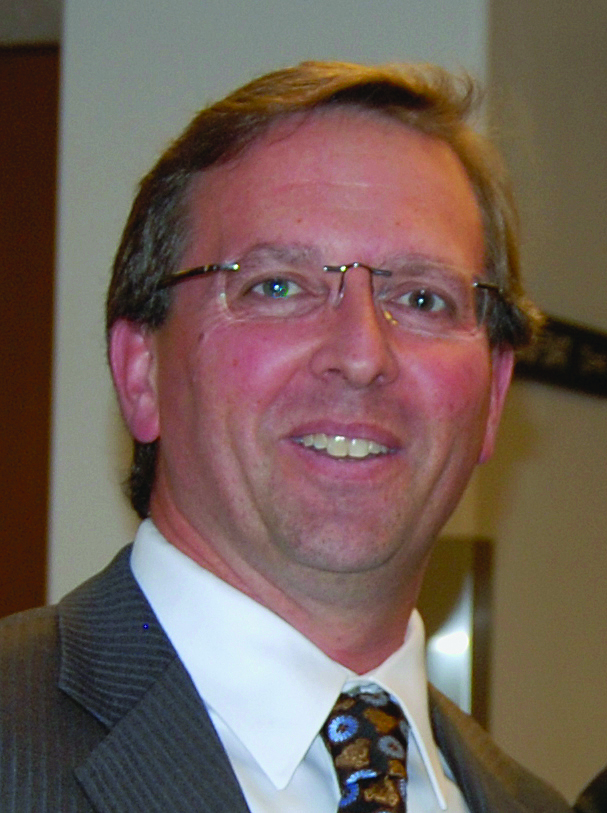
By: Mike Vitiello

In my previous post, I mentioned that many areas of marijuana law are complex and that I would discuss legal ethical issues that marijuana attorneys face. It is critical to remember that every use of marijuana violates federal law, even in states like California, where the state allows medical or recreational use. That can create problems for attorneys who work with their clients who are in the marijuana business.

While ethical rules governing attorneys vary from state to state, as a general matter, attorneys cannot engage in illegal activity. Ethical rules also prohibit attorneys from advising clients how to violate the law. This presents a dilemma for attorneys representing marijuana clients in states where marijuana is legal.

Previously, bar associations in some states indicated that an attorney advising a client on setting up a marijuana business would violate ethical rules because the business would violate federal law. More recently, however, the trend is away from that position. During the recently completed legislative session, the Legislature adopted AB 1159 that addresses some of the important questions in this area.

California is now like other states where attorneys can work with clients in the marijuana business as long as they advise them that the conduct violates federal law.

Another area that was addressed by AB 1159 was: what if an attorney uses medical or even recreational marijuana? Does that reflect badly on his or her moral character? Not anymore. The new law provides that use of marijuana is not evidence of a lack of good moral character. However, being under the influence of marijuana at work or in court might still be an ethical violation.

The area of the law that pertains to statements made by an attorney to the client or by the client to the attorney remains unclear, even after the passage of AB 1159, but you will have to listen to my podcast to hear how that area of the law is still unclear.

The Role of the Media in California’s Legislative Process

Today’s podcast focuses on the role of the media in California’s legislative process. The media’s role is so important that they’re considered a fourth branch of government and sometimes referred to as the Fourth Estate.

Their coverage – or lack thereof – can have great influence over the fate of legislation. The media can bring to light what goes on behind the scenes during California’s legislative session. They can use their coverage to draw attention to a particular piece of legislation and make the public aware of it. The media also play a large role in the ethics of legislature by covering FPPC investigations and fines, and scandals – such as in 2014 when three State Senators were suspended due to alleged criminal conduct or, more recently, in their coverage of the #WeSaidEnough movement that is bringing to light the issues of sexual harassment in the Legislature working to make this arena a safer place to work. The opinions of newspapers’ editorial boards – sought after by candidates and ballot measures in campaigns – are also important in the legislative process.

This is why taking the media into account is a key part of legislative strategy. Whether responding to a headline with a timely piece of legislation to address an issue in their local paper, or trying to get their viewpoint on a bill out to the public via an opinion piece or a letter to the editor, the media are an important means for legislators, staff, and special interest groups to have their viewpoint heard. Social media has also become important for doing this.

Prop 54, which I talked about in an earlier podcast, has also changed the dynamics with the media. Effective now, any person is authorized to take video or audio recordings of legislative proceedings – closed session excluded – and can use that for any legitimate purpose without needing to pay a fee to the State of California. Effective January 1, 2018, the Legislature will have to make audio/visual recordings of all its proceedings available online – again, excepting closed sessions.

If the role of the media are something that interests you, you should also plan on attending the McGeorge Capital Center for Law & Policy’s annual Belote Lecture on January 11, 2018. This year’s topic is Journalism in the Era of Fake News and features Jonathan Weisman of the New York Times, John Myers of the Los Angeles Times, and Joe Mathews of Zócalo Public Square. You can RSVP the event by emailing mcgeorgeevents@pacific.edu or calling (916) 739-7138.

Rules for Effective Lobbying Part 7 – Client Relations

In today’s podcast, I talk about my seventh rule for being an effective lobbyist: set yourself up for successful client relations. This is really a series of rules that will help you establish a solid foundation for a successful relationship with any client that you work with.

One example of these rules is: always under-promise and over-deliver. While it may be frustrating in the short-term to lose potential clients to lobbyists who make promises of success that they know they cannot deliver on, you and your reputation will be best served by adhering to this rule.

For more advocacy tips from me and from the faculty at McGeorge School of Law, please visit CAP·impact’s In Practice Archive or attend one of the next sessions of Capitol Seminars, hosted at McGeorge School of Law in Sacramento.


AB 1407

Today I’m following up on the conversation I had last week with Beth Hassett. Last week, Beth and I talked about the work her organization, WEAVE – Women Escaping A Violent Environment – does with coalitions like the California Partnership to End Domestic Violence – CPEDV. Feel free to go back and listen to that great conversation we had.

This week, Beth and I talked about a bill that WEAVE worked on a few years back and the impact that it’s had since becoming law. The bill was 2015’s AB 1407. You can find all the details on the legislation online courtesy of California Legislative Information – which is a fantastic resource.

We started by talking about the difficulties of getting the bill off the ground. That is not to say that the bill was a heavy lift for an author – WEAVE actually had multiple potential sponsors reach out to them. Rather, interesting and unforeseeable circumstances arose that forced WEAVE to delay going forward with the bill. You’ll just have to listen to the podcast to learn why the bill had a temporary case of failure to launch.

In addition to talking about that getting over that hurdle, we talked about some of the other behind the scenes work that went in to the process if AB 1407 going from bill to law. That includes the ins and outs of finding the right author for the bill and building a coalition of supporters.

Again, if you want to learn more about WEAVE and the work that WEAVE does, please visit their website – www.weaveinc.org. You can also find WEAVE on Facebook and Twitter @WEAVEinc.

And if you have thoughts, questions, or comments about this interview or any of our other posts and podcasts feel free to let us know in the comments, or on Twitter @CAPimpactCA. Or you can tweet at me directly @jon_wainwright.

As always, thanks for reading and listening. Keep checking back for more In Depth conversations about California legislation.


It looks like Justice Anthony Kennedy will provide the key vote again, in Masterpiece Cakeshop, Ltd. v. Colorado Civil Rights Commission, argued today in the U.S. Supreme Court.  The case pits a cake baker’s free speech claim against the state’s efforts to provide equal access to goods and services regardless of the customer’s sexual orientation.  Listen as two McGeorge School of Law professors, Larry Levine and John Sims, talk about Justice Anthony Kennedy, and his LGBT civil rights legacy on the Supreme Court.


Advocacy in Practice with Judge Morrison England Jr.

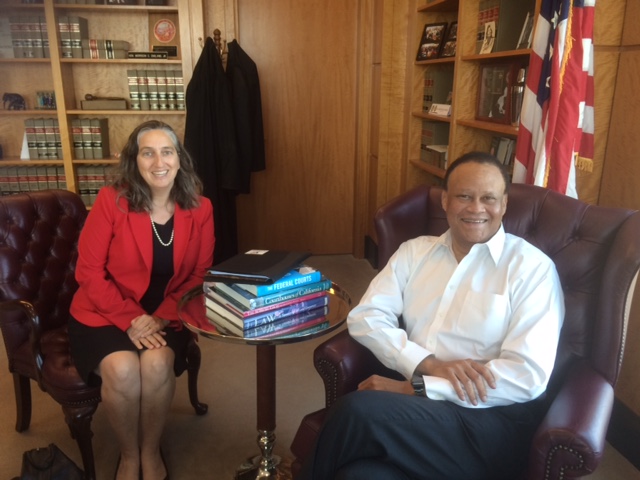
I sat down with Judge Morrison England Jr., of the United States District Court for the Eastern District of California.

We discussed his “non-traditional” path to the bench – you will have to listen to the podcast to for more information about his interesting background. He also provided  advice, insights, and observations for attorneys appearing before him.

In particular, he gave a couple of pieces of advice that stood out to me. One, he urged attorneys and judges “Don’t try to bluff your way through a situation. If you don’t know, just say so.” He noted that this kernel of knowledge came to him when he was making a challenging transition from being a transactional attorney to a California Superior Court judge.

Another great piece of advice that he gave, that seems obvious but many attorneys do not heed, is to read the scheduling orders that you are given. As he noted, in the federal court, the dates and timelines that you are given in the scheduling order are not easily modified. Once the deadlines are set, they are set. There is no wiggle room except for in extraordinary circumstances.

A few other key pieces of advice that he offered were: “Be prepared. Know your case. Know the law. And if you’re wrong or if you have a bad point, fall on the sword and accept it.” He pointed out that a great way for attorneys to distinguish themselves is to to acknowledge bad facts or adverse authority and then point out how those facts or cases are irrelevant or distinguishable.

We also discussed at length how technology is changing courtroom practice. The days of bringing bankers boxes full of binders of exhibits and depositions are now over, and instead, attorneys are now expected to bring a thumb drive, and perhaps one box of exhibits, to the courtroom.

I hope you enjoy listening to my conversation with Judge England. Be sure to tune in next time.

Misconception Monday – Ethics

Hello, and welcome to Episode 5 of my Misconception Monday series. In this series of podcasts, I identify and dispel common misconceptions that are related to the many aspects of the California legislative process.

Today we’ll be moving away from podcasts on common misconceptions as they relate to bills. If you want to refer back to those, you can always go back and listen to my podcasts on bills, bill deadlines, bill referrals, and bill amendments.

Today we’ll move in to a topic that ties in to the news about the sexual harassment that has been going on in the Capitol, both here in Sacramento and in Washington, D.C.. The topic of today’s podcast is common misconceptions about legislative ethics.

Relevant to the ongoing conversation about sexual harassment in the Legislature are the following common misconceptions that I call out in the podcast.

One misconception is that both houses of the Legislature have adopted a formal standard of conduct for their members. In fact, only the California State Senate has adopted an official code of conduct for its members. The Assembly has not adopted one.

Another misconception is that only a court of law can remove a legislator from office. Actually, the California State Constitution, Article IV, Section 5 (a) (1) reads:

Each house of the Legislature shall judge the qualifications and elections of its Members and, by rollcall vote entered in the journal, two-thirds of the membership concurring, may expel a Member.”

So it is the members of the Legislature, and not a court of law, that can remove a member from office. You can also refer to a post by my colleague, McGeorge Professor Leslie Gielow Jacobs, on disciplining elected officials to learn about some other ways elected officials can be removed from office.

I hope you enjoy today’s post and podcast on common misconceptions related to legislative ethics.